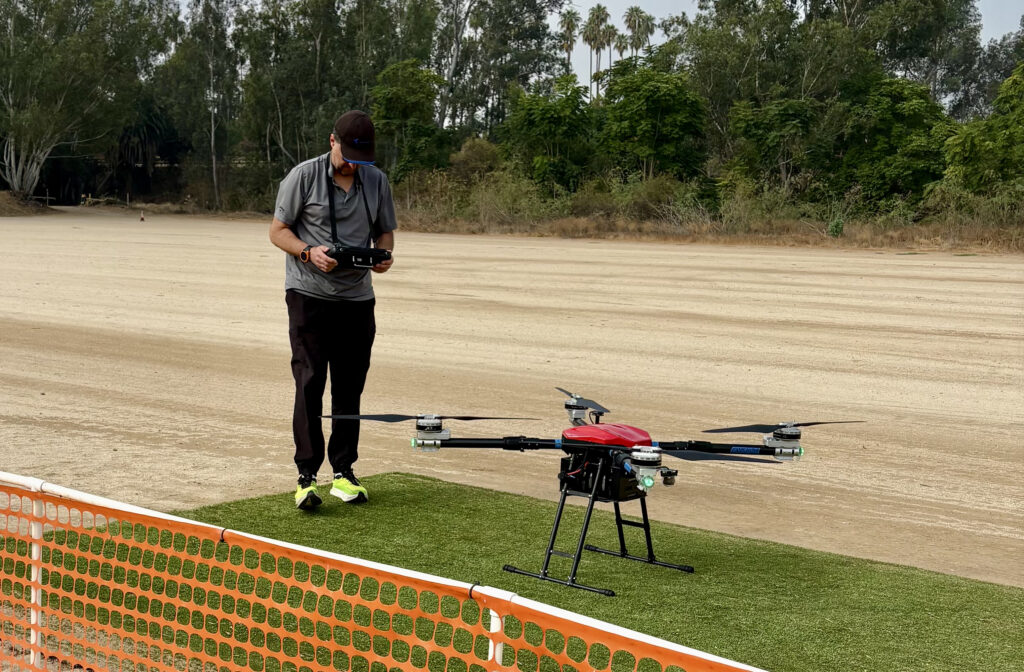
From Concept to Field Deployment
We design autonomous systems to survive real environments — not controlled demos.
Core Deployment Principles
Core Deployment Architecture
Field-Validated Systems
Every platform is tested and refined in active industrial environments before scale.
Safety-First Engineering
Redundant control systems, risk-aware autonomy, and compliance-driven architecture.
Operator Integration
Designed for human-in-the-loop control, site procedures, and industrial workflows.
Deployment Scalability
Systems engineered for repeatable implementation across facilities.
Operational Reality
- Real-world constraints
- Live industrial environments
- Iterative field refinement
- Operator-in-the-loop systems
Structured Deployment Process
Every engagement follows a defined engineering and operational framework designed for industrial execution.
1. Site Assessment & Risk Analysis
We evaluate:
• Facility layout and access constraints
• Environmental hazards and compliance requirements
• Operational schedules and downtime limitations
• Safety protocols and regulatory conditions
This phase defines deployment boundaries and performance requirements.
2. Mission & System Configuration
Based on site conditions, we configure:
• Platform architecture
• Autonomy control parameters
• Sensor and payload systems
• Communication and redundancy layers
Systems are configured for the specific operational objective — inspection, cleaning, or data capture.
3. Controlled Field Validation
Before scaled deployment:
• Systems are tested in live industrial conditions
• Risk thresholds are verified
• Operator integration is validated
• Performance metrics are confirmed
No lab-only validation. Field-tested performance.
4. Operational Integration
We integrate into:
• Existing safety management systems
• Site workflows
• Operator command structure
• Maintenance and reporting frameworks
Deployment must function within operational reality — not outside it.
5. Scaled Deployment & Continuous Refinement
After validation:
• Systems are scaled across facilities
• Performance data is monitored
• Iterative improvements are applied
• Reliability metrics are tracked
Deployment is treated as a living system — continuously optimized for industrial performance.